Module 4: Calm Your Nervous System
Learn how to do box breathing
Before moving forward, it’s essential to take a moment to slow down and let your nervous system settle. You don’t have to push through in survival mode — you can take this one calm step at a time.
Let’s start with a simple box breathing exercise:
Inhale slowly through your nose for 4 counts.
Hold your breath for 4 counts.
Exhale gently through your mouth for 4 counts.
Pause for 4 counts before the next breath.
Repeat this three times.

Below is a video to guide you through box breathing.
Acute Stress Disorder
After a traumatic event, it’s common to feel shock, confusion, anger, frustration, denial, or deep sadness. When your emotions are swirling and your brain has essentially been rewired by trauma, the best thing you can do is slow down. Give yourself permission to rest, pause, and process.
Many of the clients we’ve worked with have been diagnosed with Acute Stress Disorder (ASD). This is a short-term condition that occurs between three days and four weeks after a traumatic event. Symptoms can include increased anxiety, fear, nightmares or flashbacks, emotional numbness, or avoiding certain places or reminders. The good news is that this disorder typically lasts about 30 days, and with early support, especially from a therapist, many people recover without long-term effects.
If these symptoms are disrupting your day to day or last longer than 30 days, reach out to us for support.
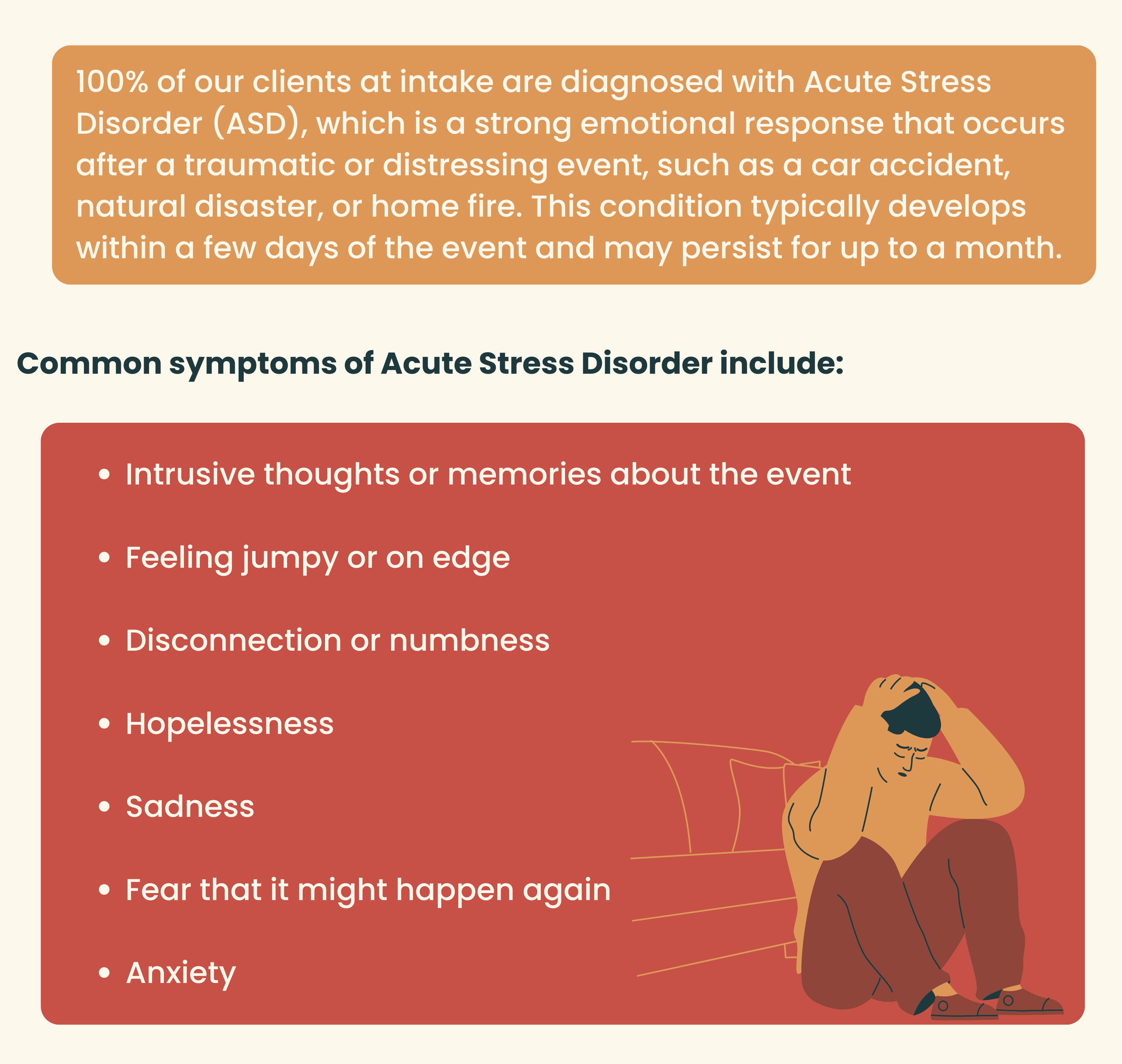
Please remember that Acute Stress Disorder shouldn’t last more than 30 days. Seek help when these symptoms are not going away on their own. Below are national links to therapist portals. If you’re looking for something more local to your home, please reach out to us and we’ll do our best to help you find support.
Your survival mantra
First steps for renters